
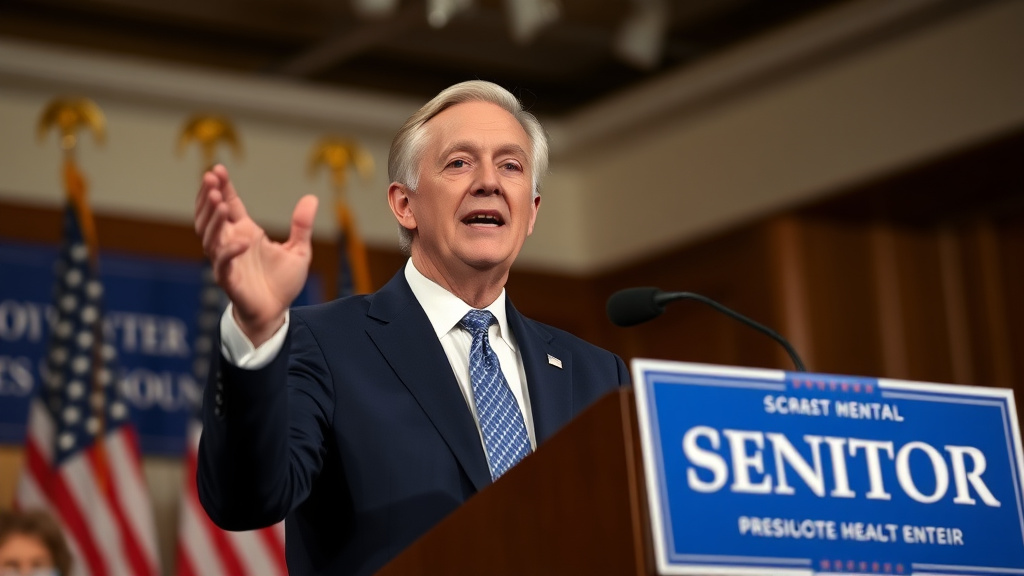
In a significant political announcement, a prominent senator has officially launched a presidential campaign with medical system reform at its core. Amid growing public concern over rising medical costs and insurance availability, the candidate has presented themselves as a leader in sweeping healthcare policy changes. This declaration represents a pivotal moment in the upcoming election cycle, as health policy becomes a key issue. The senator’s extensive platform pledges to resolve systemic issues and broaden coverage for millions of U.S. citizens.
Campaign Direction and Health Policy Focus
The senator’s campaign vision prioritizes building a stronger equitable and affordable healthcare system for all Americans. Acknowledging that medical expenses continue to be a major cause of financial difficulty, the candidate advocates for sweeping changes to decrease spending while enhancing care quality. The platform emphasizes preventive medicine, mental health services, and medication cost regulation. By tackling underlying factors of healthcare inflation, the senator seeks to guarantee that no American faces bankruptcy due to urgent medical situations or chronic illness treatment.
Key healthcare priorities include extending Medicaid coverage to underrepresented populations and enhancing protections for individuals with existing conditions. The campaign promotes increased funding to rural medical centers and telehealth infrastructure growth. Additionally, the senator endorses funding healthcare research and training programs to address physician shortages. These programs show a commitment to building a sustainable healthcare system that supports diverse communities and adapts to changing public health challenges affecting the nation.
Major Healthcare Reform Proposals
The senator’s campaign focuses on extensive healthcare restructuring designed to address systemic problems and broaden access across the nation. These initiatives seek to decrease out-of-pocket spending while maintaining quality care standards. By prioritizing preventative medicine and optimized administrative operations, the candidate works to build a more efficient healthcare system. The reform platform demonstrates thorough research and engagement with healthcare professionals, patient advocacy groups, and policy experts across the nation.
Broad-Based Coverage System
The comprehensive healthcare framework represents the cornerstone of the legislator’s healthcare initiative. This detailed plan aims to ensure health insurance access for all Americans regardless of employment status or pre-existing conditions. The framework prioritizes equity in care distribution and elimination of coverage gaps that currently affect vulnerable populations. By setting minimum coverage requirements, the proposal seeks to decrease urgent care utilization and enhance population health metrics significantly.
Putting into place this framework necessitates significant government funding and reform of existing insurance markets. The senator puts forward a phased approach starting with broadening of Medicaid programs in underserved regions. Government-private sector collaborations would support changeover phases for current insurance providers. The plan features financial incentives for employers sustaining supplemental coverage options. Detailed tracking mechanisms would measure advancement and enable ongoing modifications to ensure program effectiveness and sustainability.
- Broaden Medicaid coverage to all eligible lower-income people across the nation
- Create federal baseline coverage requirements for essential health benefits
- Create regional health cooperatives to increase competition and affordability
- Introduce income-based premium structures based on household income levels
- Develop integrated electronic health records throughout all healthcare providers
Financial Effects and Implementation Strategy
The senator’s healthcare reform proposal carries significant economic implications for both federal budgets and private sector operations. Analysts project that expanded coverage programs could generate substantial lasting savings through preventative care and fewer emergency department visits. However, implementation requires significant upfront investment in infrastructure, technology, and employee training. The campaign stresses that these upfront costs constitute essential infrastructure improvements that will ultimately lower total healthcare spending and strengthen economic productivity across all demographic segments.
The implementation strategy focuses on a staged rollout, beginning with demonstration projects in underserved communities before full-scale deployment. The senator advocates for coordinated collaboration between government agencies, healthcare providers, and insurers to enable seamless transition and limit disruption to markets. Major initiatives include efficient administrative workflows, digital healthcare system upgrades, and incentive programs for rural healthcare providers. This systematic framework aims to balance comprehensive reform goals with practical economic considerations, guaranteeing long-term healthcare transformation.
Campaign Growth and Public Response
The senator’s campaign announcement has created considerable momentum throughout various demographics and territorial areas. Early polling data shows strong support among voters focusing on accessible and affordable healthcare. Press attention has been comprehensive, with prominent media organizations featuring the candidate’s health policy initiatives prominently. Community mobilization initiatives have energized volunteers across the nation, opening campaign offices in crucial early-voting states. The excitement around this campaign reflects common discontent with the current healthcare system and desire for meaningful reform.
Public response has been decidedly favorable, particularly among young voters and those with limited insurance coverage. Town halls and campaign events have pulled in large audiences eager to connect with the senator’s proposed agenda. Social media analytics show significant online support, with healthcare reform messaging striking a chord. Opposition groups have also organized, laying the groundwork for substantive policy debates throughout the campaign. This dynamic response underscores healthcare’s prominence as a central election issue.
